I Dont Feel Like Writing Today Why
Happy Sunday Friends!
Here's one quote I'm musing on this week, two core ideas, three favorite things, and one question to carry with you into the week ahead.
One Quote I'm Musing
"You have power over your mind - not outside events. Realize this, and you will find strength." | Marcus Aurelius
🚫 The Article I Don't Want to Write
I don't want to write this article.
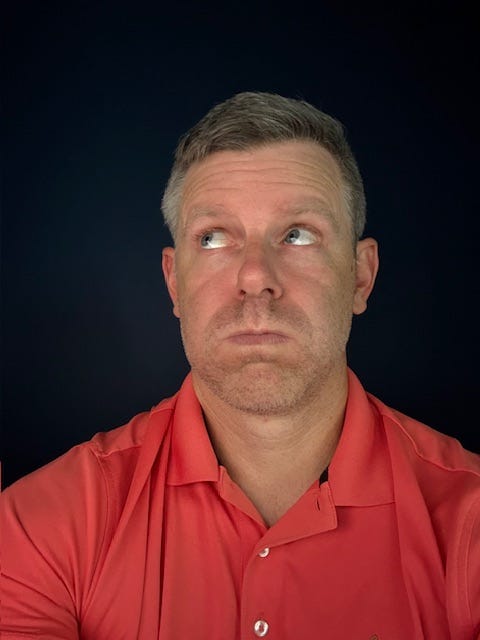
I have a thousand other things on my mind. Things I feel like I need to do. Projects calling my name. Emails stacking up. Life happening at its usual breakneck pace.
But here I am, writing the article I don't want to write. About not wanting to write it.
There's something beautifully meta about this—using resistance as the subject while actively pushing through it. Like studying procrastination by procrastinating on studying procrastination.
The truth is, I almost never want to write these articles when I first sit down. Most of the time, I start with imposter syndrome whispering: "Why would anyone want to read this from me?"
Yet here we are. Again.
🪞 The Mirror Effect
I attend a lot of engagements, talk with a lot of people. Leaders, support personnel, people just starting out, all of them looking to hear thoughts and another take on their situation. (thanks for reaching out Toki, It meant a lot... humbling and energizing). I've had this exact conversation so many times in the past three months.
Different people, same pattern. They're a fantastic mirror. Like me. Good looking (lol), intelligent, and looking to be in charge of life, freedom to live life on their own terms. Maybe they want to change up their careers, maybe they want to figure out what they want to do at university, maybe they just feel like they've been doing things because others have expectations of them.
But really, I love hearing about what is holding people back, because it's what makes me realize that those same obstacles are what I run into... what I've overcome... what they've overcome, and I can learn from too.
The most common question: "How do you stay consistent with stuff, even when you don't want to do it?"
They describe their pattern: "I start the thing, then I overthink the thing, I feel like it's not good enough, I need to prepare more for the thing."
Here's what I've learned from these conversations: the most successful people aren't the ones who never feel resistance. They're the ones who've learned to move through it systematically.
Take Sarah, a defense contractor who handles communications for a major program. She told me she'd been "preparing" to launch an internal newsletter for eight months. Eight months of research, planning, perfecting. Zero published articles.
Then she tried the 10-minute rule. Set a timer, started writing. Published her first piece that week. Now she's 15 issues in and says writing has become the part of her job she actually looks forward to. Her program manager started forwarding her pieces to senior leadership.
The hill at the start wasn't about preparation. It was about starting.
I can relate. I also don't feel like doing the things.
🎭 The Professional Paradox
Most people think I'm a guy who has his "stuff" together. Someone generally successful in his field. Someone who knows the path, sees the path, and resolutely moves down it.
Here's the thing, I almost always feel like my work isn't good enough. I think about how someone might realize in 10 years that my premise was wrong, so my existence is wrong.
And here's what research from Stanford's psychology department confirms: this feeling never goes away. Dr. Carol Dweck's work on imposter syndrome shows that 70% of people experience it, and it actually increases with success.
I've noticed something about the successful people I’ve met: To a person, they almost never want to put down what they've done because it can always be better. There can always be more research, more extrapolation, more execution.
Interestingly, none of the amazing people I've come to know enjoy the act of doing the thing, but they love having done the thing.
Writers, operators, doctors, YouTubers—they don't love getting up in the morning and starting their "thing." They don't always feel like starting their work in the morning.
Ed Sheeran still gets nervous before every show. Robert Greene still stares at blank pages. Benson Boone still feels the anxiety walking on stage.
They feel the fear and do it anyway.
The resistance isn't a bug in your system—it's a feature that separates those who do from those who don't.
🌊 When Correlation Breaks Down
I remember being exhausted after a 16-hour shift, knowing I still had to write my daily update brief. My brain was fried, my eyes were burning, and all I wanted was to collapse.
But the brief was due at 0600. The operations team needed it for their morning planning. So, I sat down and wrote it.
In that moment, it was easy to not correlate my action to my thought and feeling. Obviously, the mission was more important than being tired. I wasn't going to email my commander: "Sorry, not feeling it."
But it's way harder when we're at home, on our own, not in a mission-critical moment. With access to the internet, with our phone next to us.
We think: "Huh, I don't feel like doing this."
It's so much easier to doom scroll, to avoid the feeling we want to avoid feeling.
🔑 The Key Insight
I don't have to do what my thoughts and feelings say I should do.
This isn't willpower porn or toxic positivity. It's strategic thinking about the relationship between feeling and action.
Marcus Aurelius wrote his Meditations while fighting wars on the frontier. You think he felt like writing philosophy after days of battle? Edison failed over 1,000 times before perfecting the light bulb. Think he felt like trying again each morning?
I don't have to scroll Instagram instead of writing. I don't need to see what's happening on X.
I can feel like I want to write and write. I can feel like I don't want to write and still write.
There doesn't always have to be a correlation between the feeling and the action.
Yet we feel like there has to be.
We have a feeling, add a thought, and correlate. Creating a mental narrative to rationalize the physical symptoms.
Our anxiety comes from an old amygdala response—if we put ourselves out there with a thought that might be met with resistance from the pack, we'd be pushed out. And those ancestors who were pushed out were going to die.
Which is not the case any longer.
A counterintuitive truth: the resistance we feel is proportional to the importance of the task.
The bigger the potential impact, the stronger the resistance. Your brain is actually trying to protect you from significance.
⛰️ The Hill at the Start
I don't feel any hesitation writing in my travel journal because no one can see it. But when I engage in this weekly act of putting my thoughts out to the world, I feel very, very uncomfortable.
But just because I don't feel like doing it doesn't mean I shouldn't.
Now that I've been writing and refining my ideas for the past hour and a half, I'm feeling better. I'm vibing. I'm sweaty. It's taxing, but the resistance has been overcome.
The resistance was just to getting started.
Now that I'm on the other side of getting started, I feel much better.
There's a hill at the start. Once you get over the hill and keep going, it's so much easier to keep going.
🎯 The Work Is the Resistance
What if the passion starts to feel like work? It's going to feel like work after a while.
But it's all about recognizing your desires and doing a consistent amount of stuff that you don't want to do, then realizing that you do want to do it—it's just overcoming the resistance in the moment.
I've found that 90% of the time, after I've been doing it for 5-10 minutes, I find that I want to do it.
Here's what most people miss, something I have happily stolen from my workout buddies: it's not about the individual 10-minute sessions—it's about the compound effect of showing up.
Sarah didn't become a better communicator because of one great newsletter. She became someone her leadership trusts because she proved she could execute consistently. Each small act of overcoming resistance builds your identity as someone who follows through.
The magic isn't in the work itself. It's in becoming the type of person who does the work when they don't feel like it.
Writing, for me, is inherently enjoyable. But it's putting pieces of me out there. Because of that act of vulnerability, it still feels scary.
The trick is to love what you do, who you love—even when there's resistance.
Do the thing, even when you don't feel like it. Even during resistance.
Do the work. Buy the flowers for the spouse. Hit the gym. Hit the books. Write just a couple crappy lines.
Even when you don't feel like it.
💡 Two Ideas From Me
🏔️ The work isn't the writing—it's climbing the hill at the start. Resistance isn't a bug in your system; it's the feature that separates those who do from those who don't.
🔄 Feelings are fickle; actions are choices. Just because you don't feel like doing the thing doesn't mean you shouldn't do it. Break the false correlation.
🛠️ Resistance Response Toolkit
Here's the system I've developed and shared with those people (and still do):
The Hill-Climbing Protocol:
🎯 Name the resistance. Write down exactly what you're avoiding and why it scares you.
⏰ Commit to 10 minutes. Set a timer. This isn't about finishing—it's about starting.
🏃 Move your body first. Do 10 pushups, walk around the block, or stretch. Physical momentum creates mental momentum.
🎉 Celebrate the start. After you begin, say "I did it!" and do a fist pump. Your brain needs to know starting is the victory.
Anchor it to existing habits: "After I sit down at my desk each morning, I will set a 10-minute timer for [my resistance task]."
The pattern: They rarely stop at 10 minutes. But they always start with 10 minutes.
"I'm resisting [X] because [Y]. I commit to 10 minutes. I'll start by [Z]."
Try it. Right now. What's the one thing you've been avoiding?
The hill doesn't get smaller with time. It only gets steeper.
Three Favorite Things This Week
🎧 Podcast Episode: Tim Ferriss interviewing Derek Sivers on "The Magic of Thinking Small" – Perfect timing for this resistance theme. | Listen here
📖 Book: The War of Art by Steven Pressfield – The definitive guide to understanding resistance as a creative force. | Amazon
🎵 Song: "Scared to Start" by Michael Marcagi – Sometimes the universe sends you exactly what you need to hear. | YouTube
✍️ One Question to Take Into Your Week
What's the one thing you've been avoiding that you know you should do—and what would happen if you just started?
Grab your journal. Write down that one thing you've been resisting.
Then write: "I don't feel like doing this, and I'm going to do it anyway."
Set a timer for 10 minutes. Start.
The hill at the start is always steeper than the rest of the climb.
If this resonates, you probably know someone else who's stuck at the bottom of their hill.
Forward this to them. Sometimes the push someone needs comes from knowing they're not alone in the struggle.
Your momentum might be the permission they need to start climbing.
Until Sunday, my friends.
Stay adaptable. Stay present.
Think Dangerously.
–e

Want strategic clarity delivered directly to your inbox every Sunday?
Subscribe It’s simple, free, and might just change your week. Stay clear, strategic, and ahead of the curve.
End of transmission.